 English

 Spanish
 Portuguese


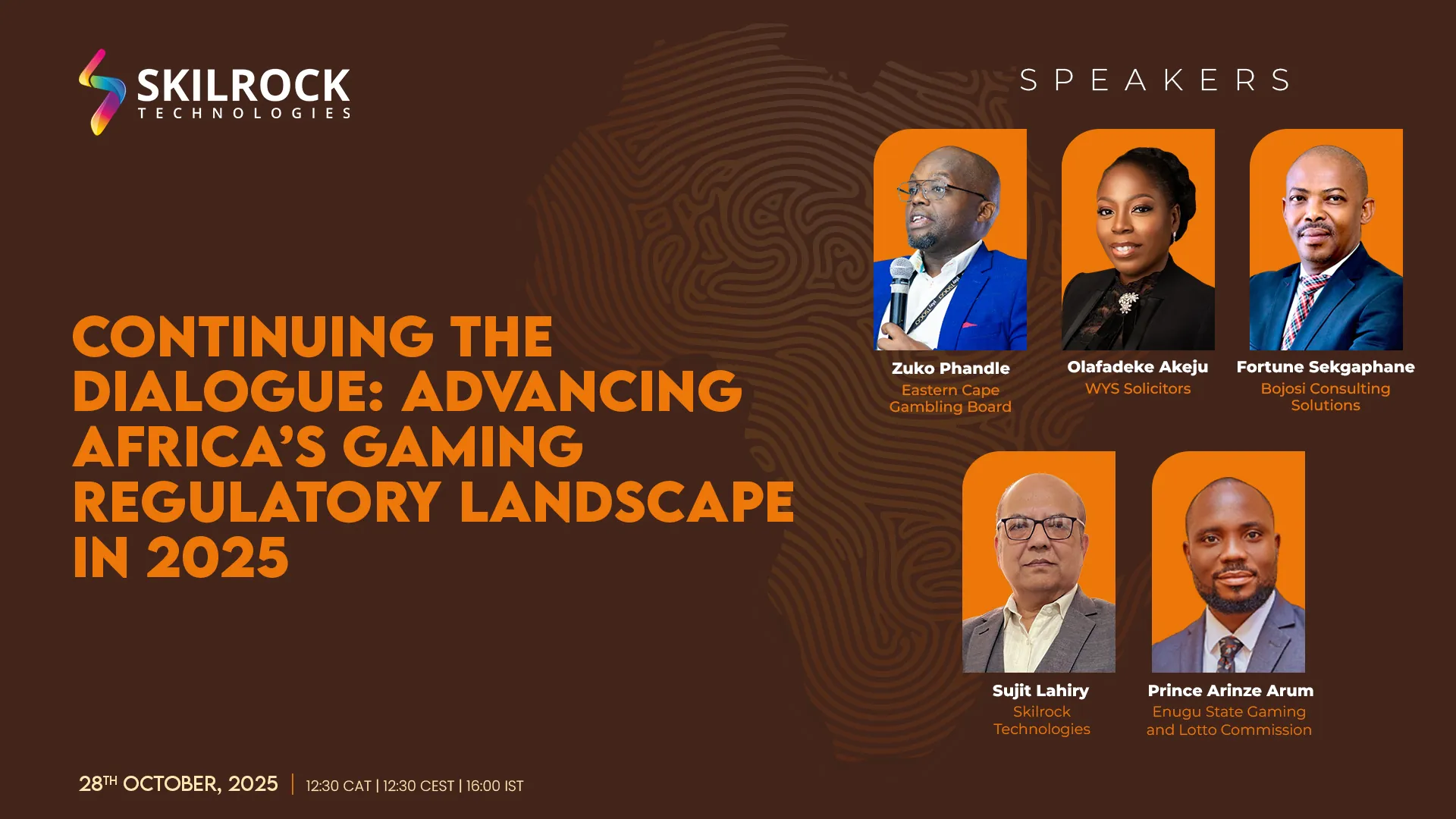
Continuing the Dialogue: Advancing Africa’s Gaming Regulatory Landscape in 2025
Disclaimer: The facts, figures, and projections shared in this blog are based on insights and statements made by panelists during the webinar. They may not represent independently verified data.Following the success of our earlier edition, the edition 2 of ‘Africa’s Regulatory Shift 2025: Changes That Matter’ brought together leading voices once again to continue an important conversation on the evolving gaming landscape across the continent.
The previous webinar focused on identifying key regulatory changes and their implications. At the same time, this edition took the dialogue a step further, shifting focus from what has changed to how these changes are shaping the industry. Participants explored how regulators, operators, and stakeholders can collectively respond to emerging challenges to foster an ethical, sustainable, and responsible regulatory environment that positions Africa as a global leader in gaming governance.
What follows is a summary of the key insights and takeaways from that engaging conversation.
Webinar Speakers
- Zuko Phandle, Manager - Audit & Compliance, Eastern Cape Gambling Board (ECGB) (Moderator)
- Fortune Sekgaphane, Director & Lead Consultant, Bojosi Consulting Solutions
- Sujit Lahiry, Executive Director & CEO, Skilrock Technologies
- Olafadeke Akeju, Managing Partner, WYS Solicitors
- Prince Arinze Arum, Executive Secretary/CEO, Enugu State Gaming and Lotto Commission
Click here to watch the full webinar!

Operational and Technological Challenges in Real-Time Monitoring and Responsible Gaming
The discussion opened with a focus on the resource limitations that hinder effective real-time monitoring across African jurisdictions. These challenges include staff shortages, budget constraints, infrastructure issues, and outdated systems.
A robust policy framework is crucial for effective gambling regulation. However, in several African jurisdictions, regulation operates under outdated legislation or without a guiding policy. This leads to inefficiencies and limited responsiveness to market and social changes.
Together, sound policy, legislative harmony, institutional strength, technological readiness, and sustainable funding form the backbone of a transparent, ethical, and future-ready regulatory environment for Africa’s gaming industry.

Integrating Technology and Responsible Gaming
Africa’s gaming ecosystem brings together regulators and operators using both legacy and modern systems. Interoperability remains a central challenge.
API-based connectivity enables real or near real-time data exchange, allowing regulators to enhance transparency, efficiency, and responsible gaming oversight across diverse markets.
Balancing Innovation and Oversight in Regulation
African regulators now operate in a fast-moving digital ecosystem where innovation often outpaces legislation. Regulators must balance agility with accountability by building in-house technological expertise and data governance frameworks.

Data Privacy and Player Protection in the Digital Age
Flexible policy and legislative frameworks allow regulators to adapt to emerging technologies without sacrificing oversight. A tiered regulatory approach enables responsiveness while maintaining control.
Building Scalable Regulatory Models
Overregulation does not guarantee security. Scalable, modular regulatory architectures that evolve with technology are essential for long-term efficiency and compliance.

Political Dynamics and Regulatory Challenges
Political instability and fragmented governance structures across ministries often hinder regulatory efficiency. Streamlined frameworks and consistent policy direction are vital for sustainable growth.
Role of AI in Addressing Risks from Unregulated Gaming
AI-powered analytics can help regulators detect illegal activity, monitor player behavior, and strengthen responsible gaming frameworks when supported by robust governance.

Cross-border Collaboration and Harmonization
Global examples from Canada, Brazil, Nigeria, and South Africa highlight the importance of collaboration, adaptability, and unified oversight in successful regulatory reform.
Conclusion
Africa’s gaming future rests on collaboration, innovation, and responsible governance. Forums like this webinar are vital for shaping a shared vision that balances opportunity with accountability.
For deeper insights and perspectives, explore our recent webinar. WATCH HERE!